Subscribe to our Newsletter
Receive our weekly newsletter, updates, and promotions, to your inbox.

Prof Uta Frith was interviewed on Wednesday, 4th March (here is the link if you missed it: https://www.tes.com/magazine/teaching-learning/general/uta-frith-interview-autism-not-spectrum) about her current views on the international definitions of autism, including the idea of autism being a spectrum disorder.
Prof Uta Frith is a researcher and is very influential in how we currently understand autism. She is currently an emeritus professor at the Institute of Cognitive Neuroscience at University College London (UCL). She was made Dame Uta Frith for her autism research. She is a deep thinker with a rigorous scientific mind, and we hold her with deep respect. Many people around the world will be influenced by her views. We are grateful to Prof Frith for continuing to lend her voice to the conversation of the evolving definitions and conceptualisation of autism.
In the interview, Prof Frith expressed her view that our definitions of autism have become too broad, to the point of being meaningless. She divides autism into two groups, the first being what we originally thought of as autism, that is autism with intellectual disability and/or language impairment, usually diagnosed before 5 years old, and the second group who do not have intellectual or language impairment, but “might feel highly anxious in social settings”, and are “perhaps characterised by mainly a sort of hypersensitivity.” The latter group, she says, are mainly adolescents and mainly women. She suggests that many in this later-diagnosed group may have real difficulties that are better understood and treated outside the autism label.
Research efforts to understand autistic subtypes, or groups, are ongoing. A recent study published in Nature Genetics in July 2025 (Litman et al., 2025) mapped behavioural observations to genetic findings and found that four groups, or “subtypes,” of autism matched the data. One of these groups comprised people who showed the core characteristics of autism, normal developmental milestones, but more psychiatric co-occurring conditions, including ADHD, anxiety and depression. This group may correspond to the second group Dr Frith identifies, the group of autistic people who are hypersensitive and anxious. This group was not differentiated by being mainly adolescents or females.
We currently have only one diagnostic term, autism, to describe a very heterogeneous group of people with many pathways to being discovered autistic, depending on other factors such as intellect, language abilities, ethnicity, socioeconomic level, support and experience of adversity, such as trauma. Over time, it is highly likely that we will discover many distinct ‘autisms’ with different aetiologies, trajectories, support needs and outcomes.
Prof Frith describes masking as “something everyone does”, and there is no problem with it, except exhaustion, but that exhaustion “could be due to other things”. Our clinical experience and the research to date show that there are more problems than exhaustion when the coping mechanism of masking is used for being autistic, including not forming a resilient sense of self-identity, clinical levels of anxiety and depression and higher levels of suicidality (Lei et al., 2024; McQuaid et al., 2024).
Prof Frith questions the evidentiary basis of masking, but this overlooks a growing body of qualitative, self-report, behavioural, and neuroimaging research examining camouflaging in autistic populations. This research shows that autistic women typically report more masking than autistic men and more than many comparison groups with low autistic traits, and their masking profiles show distinct neural and behavioural patterns (Hull et al., 2020; Jorgensen et al., 2020). Several studies using self‑report and neuroimaging report stronger or different camouflaging in autistic females compared with autistic males and with non‑autistic samples in relevant comparisons (Lai et al., 2019; Milner et al., 2022).
She states that some disorders are more common in males, and autism is one of those, which means that we have not overlooked it in females. Because autism has historically been recognised more in males does not mean that it is more common in males. Recent population-based evidence suggests that the male to female diagnostic ratio narrows substantially with age and may be much lower in adulthood than historically assumed (Fyfe et al., 2026).
Prof Frith considers that Asperger’s syndrome was rare and over-diagnosed because parents pushed for a diagnosis so that their struggling son could receive help, and hidden superpowers would be uncovered. While some families may have been drawn to the Asperger label for these reasons, it is also well documented clinically and autobiographically that the diagnosis often brought relief, self-understanding, and access to tailored support.
She describes that contra-indications for autism include the ability to interact smoothly in conversation and to understand and use irony and humour. We disagree that these are necessarily contra-indications to autism – instead, they can represent hard-won skills associated with intellectual effort and practice as well as aspects of personality.
Prof Frith believes that teachers often intuitively know what a child needs, even without a diagnosis, and that when they work with the parents, they can identify the needs and act on them straight away. This is what we hope for. Happily, sometimes this happens. A diagnosis may be sought because it hasn’t happened. Or because working together on the child’s needs, even with the lens of autism, has not been enough because more supports are needed, and these cannot be accessed without a formal diagnosis.
Prof Frith questions whether sensory accommodations are really necessary, as no research has proven they are. Whilst absence of research does not mean an absence of a positive effect, Prof Frith raises a legitimate question about the evidence base for specific sensory accommodations and whether immediate relief necessarily translates into longer-term benefit. However, from a practical and educational perspective, the absence of robust large-scale trials does not justify dismissing adjustments that may reduce distress and improve access to learning. The more useful question is not whether accommodations or coping should be chosen, but how individualised supports, communication, trust, and adaptive skills can be integrated.
A spectrum describes a wide range of traits, strengths and support needs that don’t neatly fit into categories. Nevertheless, with a pool of limited resources for support and therapy needs, categories or “lines in the sand” must be drawn. Prof Frith seems to be arguing for the term ‘autism’ to be applied only to people with a visible disability. A few would argue that there is some merit in that view – for example, it becomes clearer to know where to assign resources for governments, but what about when autism is a ‘hidden disability’?
We have found, and are sure that Prof Frith would agree, that hidden disabilities can still be disabling. We have also found that autism itself is not necessarily disabling, but it can be. For example, when disabling conditions like intellectual disability, expressive and/or language disability, and psychiatric conditions like depression and social anxiety are co-occurring. And when you are different because you relate, learn, sense and think differently, and hence do not fit in and are subject to numerous micro-aggressions, to peer rejection and/or bullying over decades.
Given how neurodivergent we are as a human race, as Prof Frith describes, it is perhaps not surprising that there are many ways to be autistic. What is needed, in our view, is recognition and acceptance of these variations, and a strong commitment to inclusive practice across health, community and education settings to ensure that the mental health epidemic currently widely evidenced for autistic people is brought to an end.
We are aware that Prof Uta Frith’s comments have a context. With widening recognition of both autism and ADHD, the demand for diagnostic assessment, support, and therapy in the UK long ago outstripped the capacity of the health and education systems to respond in a timely and meaningful way. Many people are left on long waiting lists while their mental health declines. Teachers and school staff often have little to no training in autism and are left to utilise strategies that do not work, and often lead to worse outcomes, for autistic people. Health practitioners are similarly often lacking in training to be able to adapt their methods for autistic people, and many autistic adults do not recover in therapy for their mental health problems. Autistic people who also have an intellectual and/or speech disability are now considered the neglected group in autism because so much more research funding and funding for autism has been funnelled to the autistic group who have fluent speech and no intellectual impairment. This is a UK context, but it is also happening in many developed countries.
Prof Frith will be worried, as many of us are, that there will not be enough funding to support those autistic people who have the highest support needs. International definitions of autism, such as those Prof Frith is describing, appear in the DSM and ICD. These textbooks are for defining people by deficit and disability to be able to apportion funds to provide support and therapy. She is concerned that if the gates are too wide, then too many people will qualify for funding. She is arguing for keeping the term autism for people who have very evident and high support needs.
When the term Asperger’s syndrome was dropped from the DSM and ICD systems, there was an identity crisis for those with the diagnosis. They mourned the loss of their positive identity. Steve Silberman wrote a book called “Neurotribes” (2015), shining the light on the new movement of embracing neurodiversity and talking about autism as a naturally occurring form of cognitive difference. Those with Asperger’s syndrome started, slowly but surely, to embrace their difference with the new language – autism. Newly diagnosed people embraced this new language, and being autistic was embraced as a positive identity.
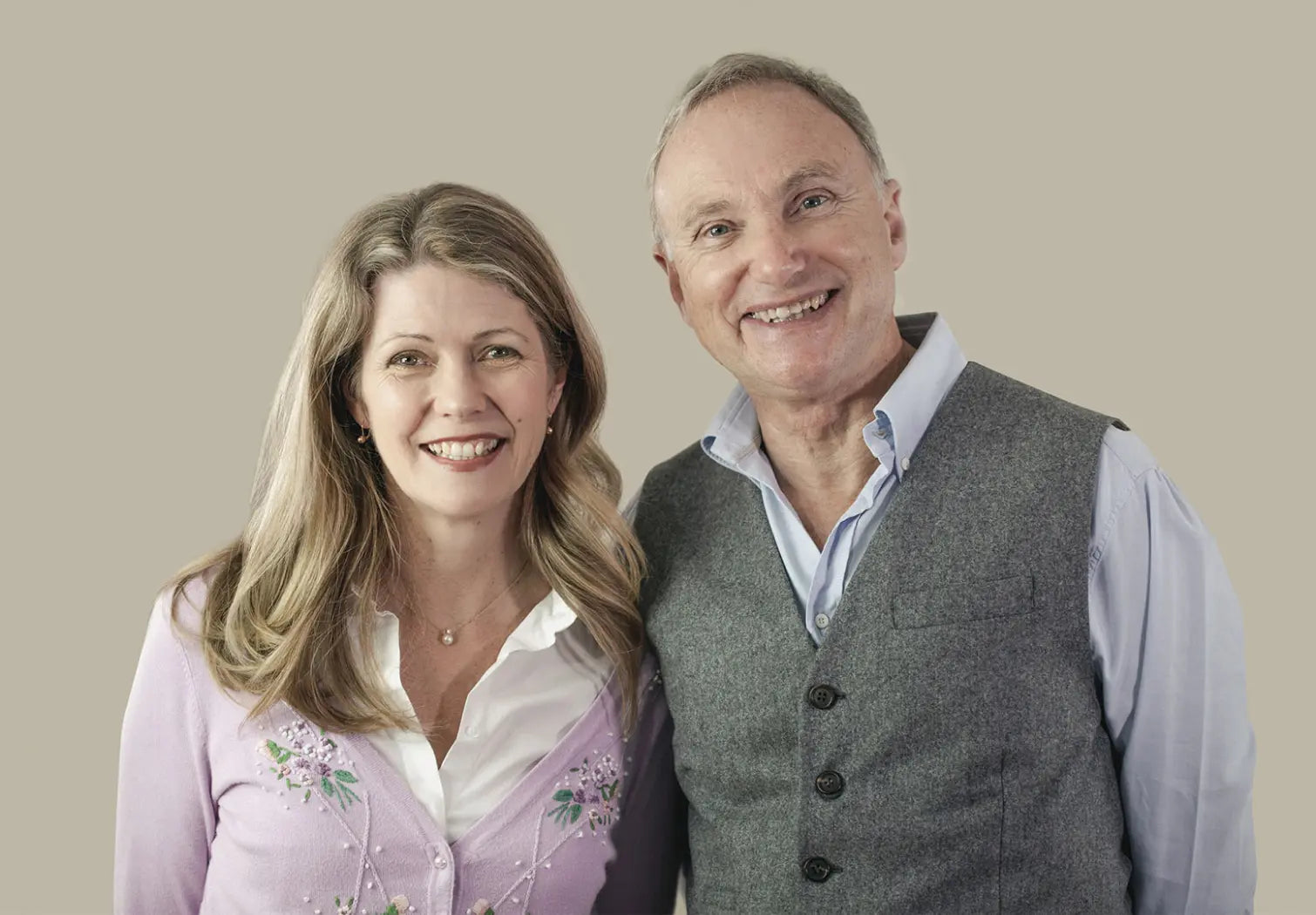
One of us (MG) meets diagnostic criteria for autism spectrum disorder, except criterion D – which states that symptoms must cause significant impairment in core areas of daily living, such as occupation, leisure and relationships. It can be argued that Michelle does not meet diagnostic criteria for autism, and yet she embraces it as a positive identity. It could have been disabling. Michelle suffered years of crippling social anxiety and depression, but she was lucky – there were enough protective factors to help her through – including opportunity, supportive parents, a lack of “big T” trauma, access to education and therapy. Having at least average intelligence and fluent speech are also big protective factors.
Autism can be both a disability and a positive identity for an individual. Research, clinical and personal experience indicate that embracing autism as a positive identity is protective against mental health conditions. Societal attitudes to autism matter because it is our attitude that determines how much curiosity, support and acceptance we offer. Embracing autism as a spectrum and understanding how very diverse the people are within that spectrum provides a pathway forward – to understanding what people need and being able to address those needs as a community. We wish the protective factors of opportunity, supportive parents, a lack of “big T” trauma, access to education and therapy to be available for all autistic people.
If this discussion has sparked questions or you'd like to deepen your understanding of autism, Attwood & Garnett Events offers a range of online courses and live webcasts covering topics like diagnosis, mental health, and supporting autistic people across the lifespan. The courses are designed for parents, educators, clinicians, and autistic people themselves — wherever you are in your journey. You can browse what's available at attwoodandgarnettevents.com.
Fyfe, C., Winell, H., Dougherty, J., Gutmann, D. H., Kolevzon, A., Marrus, N., ... & Sandin, S. (2026). Time trends in the male to female ratio for autism incidence: population based, prospectively collected, birth cohort study. bmj, 392.
Hull L. et al. (2020), Gender differences in self-reported camouflaging in autistic and non-autistic adults, Autism, vol. 24, no. 2, pp. 352–363. doi: 10.1177/1362361319864804.
Jorgenson, C., Lewis, T. J., Rose C. A., and S. M. Kanne, (2020). Social Camouflaging in Autistic and Neurotypical Adolescents: A Pilot Study of Differences by Sex and Diagnosis., Journal of Autism and Developmental Disorders, vol. 50, no. 12, pp. 4344–4355, doi: 10.1007/S10803-020-04491-7.
Lai M.C. et al. (2019). Neural self-representation in autistic women and association with ‘compensatory camouflaging’.,” Autism, vol. 23, no. 5, pp. 1210–1223, doi: 10.1177/1362361318807159.
Lei, J., Leigh, E., Charman, T., Russell, A., & Hollocks, M. (2024). Exploring the association between social camouflaging and self- versus caregiver-report discrepancies in anxiety and depressive symptoms in autistic and non-autistic socially anxious adolescents. Autism, 28(10), 2657-2674. https://doi.org/10.1177/13623613241238251
Litman, A., Sauerwald, N., Green Snyder, L. et al. Decomposition of phenotypic heterogeneity in autism reveals underlying genetic programs. Nat Genet 57, 1611–1619 (2025). https://doi.org/10.1038/s41588-025-02224-z
McQuaid, G., Sadowski, L., Lee, N., & Wallace, G. (2024). An Examination of Perceived Stress and Emotion Regulation Challenges as Mediators of Associations Between Camouflaging and Internalizing Symptomatology. Autism in Adulthood, 6(3), 345-361. https://doi.org/10.1089/aut.2022.0121
Milner V. L., Mandy W. , Happé, F. & Colvert E. (2022). Sex differences in predictors and outcomes of camouflaging: Comparing diagnosed autistic, high autistic trait and low autistic trait young adults, Autism, vol. 27, no. 2, pp. 402–414, doi: 10.1177/13623613221098240.